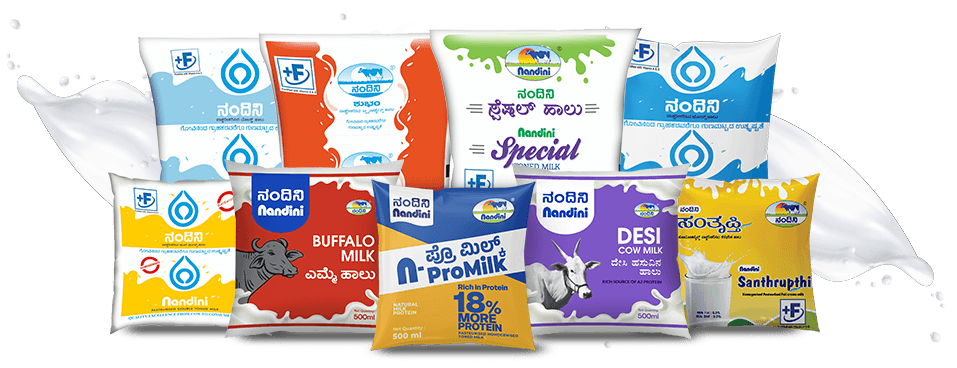
BENGALURU: In a move that could shore up support among the state’s dairy farmers but put an additional burden on urban households, particularly in Bengaluru, the State Cabinet has approved a proposal to increase the price of Nandini milk by up to ₹8 a litre.
The decision comes at a time when the Congress government is facing pressure from milk producers over rising input costs and comes with the prospect of a higher monthly grocery bill for lakhs of consumers. While the government has justified the increase as necessary to protect dairy farmers, the move is likely to be closely watched in Bengaluru, where consumers have already faced repeated increases in the price of Nandini milk in recent years.
The Cabinet, which met on Tuesday, authorised Chief Minister D K Shivakumar to take the final call on the quantum and implementation of the hike. The government is required to seek the Election Commission’s clearance before formally announcing the increase as the Model Code of Conduct is in force for the Legislative Council elections. The hike is expected to come into effect from November 1, subject to the EC’s approval.
Under the proposal, ₹6 of the proposed ₹8 increase is expected to go to milk producers, with ₹2 going to the milk unions. The arrangement, however, is yet to be formally finalised.
If the entire increase is passed on to consumers, the price of Nandini’s popular toned milk in the blue packet will rise from the existing ₹46 a litre to ₹54. This would make it the fifth revision of Nandini milk prices since November 2022. Prices were increased by ₹3 in November 2022, another ₹3 in July 2023, ₹2 in June 2024 and ₹4 in March 2025.
Farmers’ pressure
The proposal follows sustained pressure from Karnataka’s milk producers’ unions, which had sought a higher procurement price citing an increase in the cost of cattle feed, fodder, medicines, transportation and plastic packaging.
The 16 cooperative milk unions under the Karnataka Milk Federation had initially sought a ₹12-per-litre increase. At a subsequent meeting with the Chief Minister, they sought an increase of ₹8-10 per litre. The unions have argued that Karnataka’s procurement price is lower than that in neighbouring States.
According to figures cited by the unions, toned milk is procured at ₹35 a litre in Karnataka, compared with ₹41.50 in Andhra Pradesh, ₹41.80 in Kerala, ₹41 in Maharashtra and ₹42.20 in Tamil Nadu.
The government has also pointed to the drought situation and shortage of fodder as reasons for protecting dairy farmers. A minister told The Times of India that farmers were facing crop losses and fodder shortages and that protecting their interests was a reason for approving the proposal.
The political dimension of the decision is significant. Congress legislators themselves had recently urged the government to raise the milk procurement price to support dairy farmers. Kunigal MLA H D Ranganath and Malur MLA K Y Nanjegowda had sought an ₹8-10 per litre increase, while Nanjegowda cited sharply higher cattle-feed and cattle-purchase costs.
Urban consumer impact
For consumers, however, the proposed hike comes after four revisions in less than four years. If implemented in full, an ₹8 increase would represent a rise of nearly 17% over the current ₹46-a-litre price of toned milk.
For a Bengaluru household consuming two litres of milk a day, the proposed increase would translate into an additional expenditure of about ₹480 a month, assuming the full ₹8 is passed on to consumers.
The impact could be wider than the direct increase in household milk bills. Nandini milk is extensively used by hotels, restaurants, tea shops, bakeries and other food businesses, potentially adding to input costs across the urban food economy.
The Cabinet’s decision therefore brings into focus the competing demands facing the government: ensuring better returns for dairy farmers while limiting the impact of rising prices on consumers.
The government’s argument is that the increase is needed to sustain milk production and protect farmers from rising input costs. For urban consumers, particularly in Bengaluru, the immediate question will be whether the higher procurement returns translate into a proportionately higher retail price.
The final quantum of the hike and its implementation date will depend on the Chief Minister’s decision and the Election Commission’s clearance.